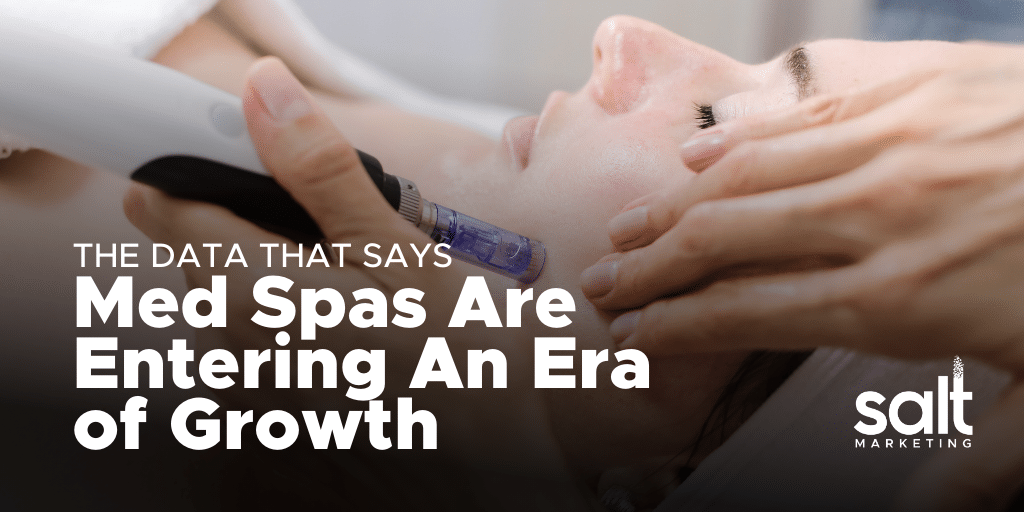
2026 Is a Growth Opportunity for Med Spas and Wellness Practices
If you’ve felt even a flicker of uncertainty about our industry lately, you’re not alone. The economic headlines have been dramatic, the commentary has been loud, and somewhere along the way med spa and wellness owners were told to brace themselves — to hold back, cut expenses, and wait for things to “settle.”
Legal, compliance, and regulatory conversations continue to evolve across the aesthetics and wellness space. New guidance, shifting oversight, and increased scrutiny in certain areas have understandably added another layer of caution for practice owners who are simply trying to run ethical, profitable businesses.
But when we step back and look at the broader picture, something important becomes clear. The wellness industry is not quietly retreating; it is steadily expanding. Yes, 2026 is bringing change. Consumer behavior is evolving. Regulatory frameworks are tightening in places. Expectations are rising. And yet, the data shows that wellness is becoming one of the most resilient and opportunity-rich sectors in the entire economy.
Spending patterns are shifting toward prevention, recovery, longevity, and optimization. Younger generations are prioritizing health and vitality over nightlife and excess. Consumers are choosing proactive care over reactive treatment. In other words, the underlying demand for what med spas and wellness practices provide is not disappearing — it is maturing.
In this article, we’re going to walk through the numbers, the trends, and the shifts shaping 2026 so you can speak confidently about the state of the industry at your next conference, networking dinner, or team meeting. Because the owners who understand what is truly happening right now are the ones positioned not just to survive change, but to grow within it.
Let’s take a clear-eyed look at what is unfolding — and why this moment may be far more promising than the noise would suggest.
The Wellness Economy Has Shifted — And It’s Working in Your Favor
Over the past several years, the wellness economy has undergone a meaningful transformation. What was once considered discretionary — something reserved for strong economic cycles or treated as a luxury — has increasingly become integrated into how people define responsible self-care and long-term health.
Consumers are no longer viewing wellness services as occasional indulgences. Instead, they are seeing them as practical tools for managing stress, improving daily performance, protecting long-term vitality, and maintaining confidence in an increasingly demanding world. The language around wellness has shifted from pampering to prevention, from luxury to longevity.
According to the Global Wellness Institute, the global wellness economy reached approximately $6.32 trillion, surpassing both the pharmaceutical and sports industries in size. Even more telling is the recovery trajectory. After the temporary disruption of 2020, wellness rebounded faster than nearly any other major sector and has continued to expand steadily. Growth has not simply returned to pre-pandemic levels; in many categories, it has exceeded them.
This pattern suggests something deeper than a short-term trend. It reflects a structural change in how individuals allocate time, attention, and discretionary income. Wellness is no longer treated as an add-on to life; it is increasingly seen as foundational to it.
Med spas and wellness practices sit directly at the center of this evolution. They occupy the intersection where medical oversight meets lifestyle enhancement, where prevention meets aesthetics, and where clinical credibility supports everyday confidence. As the broader wellness economy matures, this positioning becomes increasingly valuable.
The “Lipstick Effect” Has Evolved Into Self-Care, Recovery, and Longevity
Economists have long described what’s known as the “lipstick effect” — the tendency for consumers to continue spending on small indulgences during uncertain economic periods. When larger purchases feel risky, people gravitate toward manageable luxuries that provide a sense of control, comfort, or confidence. What has changed is not the psychology, but the expression of it.
In past decades, that pattern may have shown up in cosmetics, salon visits, or modest beauty splurges. Today, the same behavioral impulse is increasingly directed toward experiences that promise energy, resilience, and long-term vitality. Instead of simply enhancing appearance, consumers are investing in services that help them feel optimized; physically, mentally, and emotionally.
Bank of America analysts began calling attention to this shift in early 2025, describing wellness services as consistent economic standouts across multiple years. Their research noted not only steady spending patterns, but a deeper generational reallocation of discretionary income toward health-focused behaviors. Younger consumers, in particular, have demonstrated a willingness to prioritize fitness, recovery, preventative treatments, and aesthetic maintenance over categories that once dominated discretionary budgets.
What stands out most is the motivation behind the spending. Consumers are not seeking excess or indulgence for its own sake. They are seeking agency. They are seeking recovery in a high-performance world. They are seeking longevity in an era that increasingly emphasizes proactive health.
This reframing matters. It suggests that wellness spending is not fragile or purely trend-driven. It is rooted in a broader cultural movement toward optimization and preventative care — a movement that has only strengthened as we move through 2026.
For med spa and wellness practice owners, this is not a passing wave. It reflects a durable shift in consumer values, one that aligns directly with the services you are positioned to provide.
What the Latest Data Says About Wellness and Med Spa Marketing in 2026
Let’s talk numbers — because confidence is built on clarity.
The broader wellness economy continues to show measurable strength heading into 2026. According to the Global Wellness Institute, the global wellness economy reached $6.32 trillion, representing one of the fastest post-pandemic recoveries of any major sector. The Institute projects continued expansion across personal care, beauty, physical activity, and preventative health categories through the end of the decade.
On the consumer spending side, Bank of America Institute data throughout 2024 and 2025 showed consistent resilience in health and self-care categories. In early 2025, Bank of America analysts noted that fitness spending saw a 7% year-over-year increase, marking one of the strongest growth periods in nearly a year and a half. This growth occurred even as broader retail spending showed signs of moderation — a signal that wellness was not being deprioritized in consumer budgets.
Generational spending patterns further reinforce this shift. Bank of America research has highlighted that Millennials and Gen Z allocate a higher percentage of their spending toward fitness and wellness than previous generations, in some cases surpassing what they spend on traditional social categories like bars and nightlife. Younger households are demonstrating a clear reallocation of discretionary income toward movement, recovery, aesthetic treatments, and proactive health services.
This is not a small behavioral adjustment. It represents a broader redefinition of discretionary spending. Rather than eliminating indulgence during periods of economic uncertainty, consumers are redirecting it. Experiences tied to health, longevity, and self-optimization are increasingly prioritized over categories that were once considered recession-resistant. Non-alcoholic beverage spending, gym memberships, recovery therapies, and preventative treatments have all shown steady momentum.
The takeaway is not simply that “people are still spending.” It’s that they are spending more deliberately. Wellness is being treated less as an occasional luxury and more as an investment in quality of life. When consumers mentally shift from impulse-driven purchases to the idea of intentional investments, they seek providers who demonstrate credibility, education, and clarity. They want to understand the outcomes. They want to trust the expertise. They want to feel guided, not sold to.
In that environment, marketing becomes more than promotion. It becomes positioning. And the practices that communicate clearly about value, results, and long-term benefit are the ones most likely to capture sustained growth in 2026.
Med Spas Are One of the Fastest-Growing Segments in Wellness
Within the broader expansion of the wellness economy, medical spas continue to distinguish themselves as one of its most dynamic and fast-growing segments.
The United States is now home to more than 10,000 med spa locations, and industry reporting in recent years has placed average annual revenues at approximately $1.4 million per practice. Market analyses project continued double-digit growth rates for medical aesthetics and wellness services through the end of the decade, reflecting sustained consumer demand rather than short-term enthusiasm. This trajectory is not accidental. It reflects alignment.
Modern consumers increasingly seek solutions that bridge clinical credibility with lifestyle enhancement. They want services that are medically supervised yet approachable, results-driven yet efficient. Non-invasive and minimally invasive treatments appeal to individuals who value noticeable outcomes without the disruption or risk associated with more aggressive interventions. Just as importantly, the emphasis has shifted toward prevention and optimization — maintaining vitality, appearance, and performance over time rather than reacting only when problems arise.
As traditional healthcare systems grow more complex, time-constrained, and administratively burdensome, many consumers are gravitating toward environments that feel accessible, responsive, and personalized. Med spas and wellness clinics often offer a hybrid experience: professional oversight combined with a setting that feels empowering rather than intimidating.
This positioning places med spa owners in a uniquely influential role. They are not simply providing services; they are guiding clients through decisions about aging, confidence, recovery, and long-term health. In a marketplace where consumers are increasingly proactive and informed, that guidance becomes deeply valuable.
The continued growth of the med spa sector is therefore not surprising. It sits squarely at the intersection of cultural trends toward longevity, aesthetic maintenance, and preventative care — trends that show no indication of slowing in the remainder of 2026.
The Wellness Services Consumers Are Prioritizing Right Now
As 2026 unfolds, demand continues to concentrate around services tied to longevity, recovery, and sustained energy. What’s notable is not simply which modalities are popular, but the broader themes they represent. Consumers are gravitating toward offerings that promise optimization rather than indulgence.
One major category seeing continued growth is recovery and performance support. Modalities such as red light therapy, infrared sauna, cryotherapy, and contrast therapy have moved decisively into the mainstream. Once associated primarily with elite athletes or biohacking enthusiasts, these services are now embraced by busy professionals, parents, and aging adults seeking improved recovery, reduced inflammation, and enhanced daily performance. The appeal lies in both the physiological benefits and the psychological signal — these practices suggest proactive care and personal resilience.
A second area gaining momentum centers on metabolic and hormonal optimization. Consumers are increasingly aware of the role hormones, insulin sensitivity, and nutrient status play in energy, weight regulation, mood, and aging. The rise of GLP-1 medications has accelerated broader conversations about metabolic health, often leading patients to seek comprehensive support that includes hormone balancing, nutritional guidance, and medically supervised optimization programs. Rather than reactive treatment, clients are looking for structured pathways toward sustainable vitality.
Finally, there is a sustained shift toward preventative and longevity-focused aesthetics. The traditional model of waiting for visible aging before intervening is being replaced by maintenance strategies designed to preserve skin quality, collagen production, and overall appearance over time. Non-invasive and minimally invasive treatments that support long-term outcomes align well with this mindset. Clients increasingly see aesthetic care as part of a broader longevity plan, not a cosmetic afterthought.
Across these categories, the common thread is clear. These services are not framed as luxury experiences reserved for surplus income. They are positioned and increasingly perceived as tools for better living. They promise durability, resilience, and confidence in a world that feels demanding and fast-moving.
For med spa and wellness practice owners, this thematic shift is significant. It suggests that growth is less about chasing every new device and more about understanding the deeper motivations driving client decisions. When your messaging reflects those motivations — performance, vitality, prevention, longevity — you align naturally with where consumer demand is headed.
Why “Recession Talk” Isn’t Matching Consumer Behavior
This is where many wellness and med spa owners find themselves hesitating. The economic commentary sounds cautious. News cycles amplify uncertainty. Industry forums circulate concern. It can begin to feel as though prudence requires pulling back. And yet, when we examine actual consumer behavior, the pattern tells a more nuanced story.
Bank of America Institute’s consumer card data throughout 2024 and 2025 showed that while certain discretionary retail categories softened, spending in health, fitness, and self-care remained comparatively steady. In early 2025, analysts noted year-over-year growth in fitness-related spending even as broader retail categories fluctuated. Perhaps more telling, generational data revealed that Millennials and Gen Z were allocating a greater share of their discretionary income toward wellness-related experiences than toward traditional social categories such as bars and nightlife.
In other words, consumers were not broadly retreating from spending. They were reallocating. Periods of economic uncertainty often prompt households to become more intentional. Large capital purchases may slow. Luxury travel may compress. But categories tied to personal wellbeing, stress management, and daily quality of life frequently demonstrate resilience. Behavioral economists have long documented this pattern, and more recent spending data suggests wellness is increasingly occupying that resilient category.
This does not mean the market is immune to fluctuation. It does mean that consumer priorities have shifted in a way that benefits practices positioned around prevention, vitality, and optimization.
History also offers perspective on business behavior during uncertain periods. Companies that sharply reduce visibility often struggle to regain momentum when conditions stabilize, while those that maintain strategic presence frequently gain disproportionate market share. When competitors go quiet, consistent communication stands out.
The wellness industry, by its nature, is emotionally anchored. It addresses stress, aging, performance, and identity — concerns that do not disappear during economic shifts. For med spa and wellness practice owners, that emotional durability provides a degree of insulation that many other sectors lack.
The question, then, is not whether uncertainty exists. It is whether the data justifies retreat. At present, the evidence suggests that thoughtful consistency — rather than contraction — is the more strategic posture.
What Thriving Wellness Practices Are Doing Differently
When you look closely at med spas and wellness practices that are thriving in the current environment, a few consistent patterns emerge. Interestingly, their success is rarely tied to being the cheapest option in town, the most extravagant, or even the newest entrant in the market. What differentiates them is clarity.
High-performing practices are exceptionally clear about who they serve and the outcomes they deliver. Rather than offering a menu of disconnected services, they articulate a cohesive point of view. They position themselves around specific problems — aging skin, hormonal imbalance, metabolic fatigue, recovery optimization — and communicate why their approach is both medically sound and strategically designed for long-term results.
Their messaging does not assume consumer understanding; it builds it. Through educational content, thoughtful explanations, and transparent conversations about outcomes and expectations, they guide prospective clients toward confident decisions. In an era where consumers are researching extensively before booking, this kind of clarity creates trust long before a consultation ever occurs.
Visibility also plays a role. Thriving practices maintain consistent organic presence across the channels where their audience is already paying attention — search, social platforms, email, and educational resources. They understand that authority compounds over time. When economic noise causes others to hesitate or reduce communication, steady, value-driven content often stands out even more.
Perhaps most importantly, these practices think beyond short-term promotions. Instead of relying exclusively on one-off campaigns or seasonal discounts, they invest in positioning. They develop messaging frameworks that anchor their brand, publish content that answers real client questions, and build systems that nurture prospects from initial awareness through long-term retention.
This approach reflects leadership rather than reaction. It acknowledges that growth in a maturing wellness market comes not from chasing every trend, but from articulating a clear perspective and consistently reinforcing it. In doing so, these practices become more than service providers. They become trusted authorities within their communities — and that authority drives durable growth.
The Real Opportunity in 2026: Leadership, Visibility, and Momentum
When uncertainty enters the conversation, marketing is often the first line item businesses reconsider. The instinct is understandable. In moments of economic noise, pulling back can feel prudent and responsible. But both historical precedent and current data suggest a different perspective.
Marketing, when approached strategically, is not simply an expense. It is infrastructure. It is the mechanism through which trust is established long before a consultation is ever booked. It is how authority builds gradually and quietly while competitors hesitate. It ensures that when a prospective client finally decides they are ready to invest in their health, appearance, or longevity, your practice is already familiar, credible, and top of mind.
And in a growing market, visibility compounds.
The wellness economy is expanding. The med spa sector continues to demonstrate strong performance. Consumer behavior reflects sustained prioritization of self-care, preventative health, and optimization. While headlines may amplify caution, the measurable data does not support the idea of contraction. Instead, it points toward maturation — an industry that is evolving and strengthening.
Moments like this tend to separate operators into two groups. Some wait for perfect clarity before acting. They pause initiatives, reduce communication, and delay investment until uncertainty feels resolved. Others recognize that change often signals opportunity. They refine their messaging. They clarify exactly who they serve and why their approach matters. They invest in educational, organic content that answers real questions and builds long-term trust. They strengthen positioning so that when demand continues to rise, they are prepared to meet it.
This approach is not about aggressive promotion or short-term tactics. It is about intentional presence. It is about recognizing that consumer expectations are rising and responding with clarity, consistency, and leadership.
The practices that will define the next several years are not necessarily the largest or the flashiest. They are the ones who understand the cultural shift toward longevity and proactive health and choose to align themselves with it thoughtfully. They communicate value clearly. They educate rather than overwhelm. They remain steady while others hesitate.
2026 is bringing change — regulatory evolution, economic recalibration, and higher standards across the board. But it is also bringing momentum. The demand for aesthetic maintenance, recovery services, metabolic support, and longevity-focused care is not disappearing. It is becoming more intentional and more sophisticated.
The opportunity, then, is not simply to “survive” the year. It is to position your practice to lead within it. Strengthening your foundation, clarifying your voice, and ensuring your visibility are not reactive moves; they are strategic ones. When prospective clients seek guidance in a maturing wellness landscape, they will gravitate toward practices that demonstrate stability and expertise.
Industries are often shaped during periods of transition. So are leaders. This may well be one of those defining periods — not because of fear, but because of forward motion. And those who recognize the momentum and move with it are often the ones who look back and realize 2026 was the year they stepped into their next level of growth.